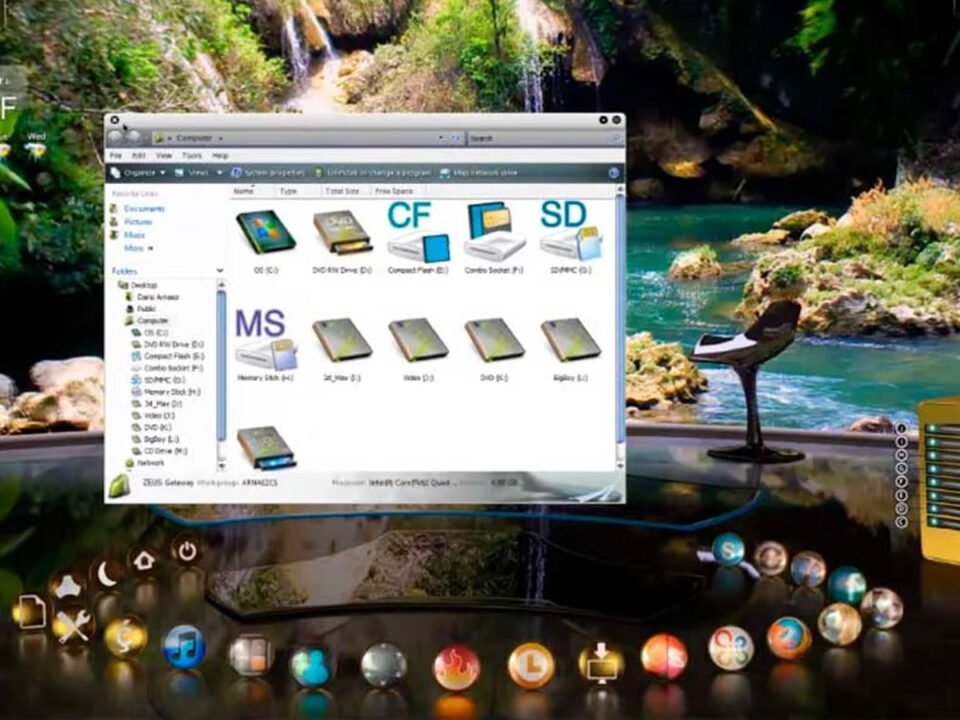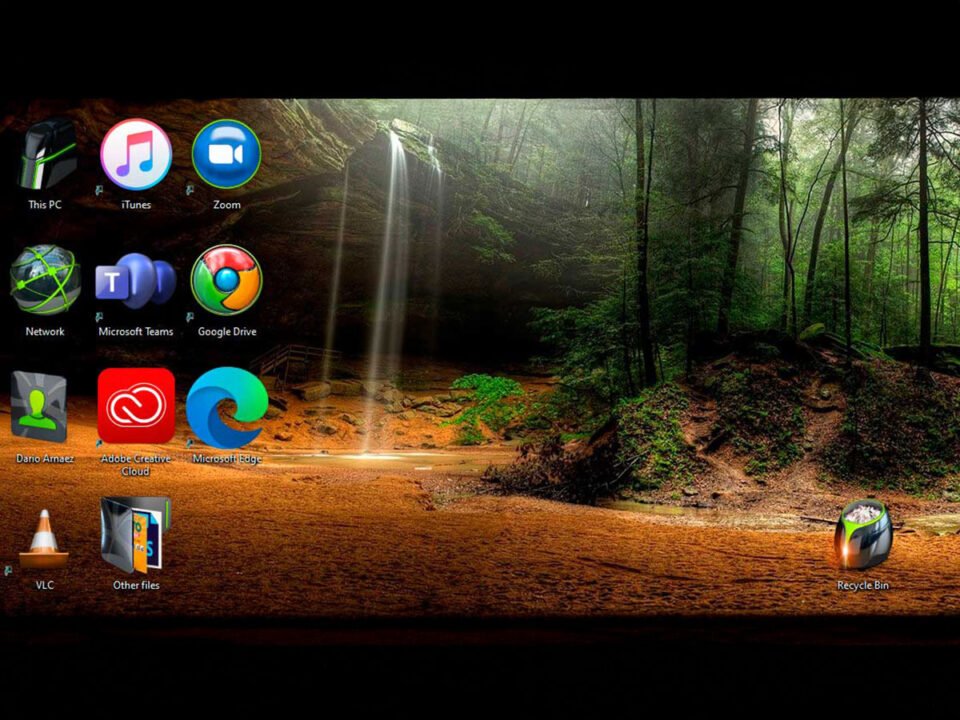
Metallic icons
June 6, 2020
What is Desktop Art?
In today’s digital-first workplaces, professionals spend more time interacting with screens than with any physical environment. Yet, while companies carefully design offices, brand guidelines, and communication systems, the desktop—the most frequently viewed workspace—often remains overlooked. Desktop Art, when designed with intention and symbolism, becomes a powerful tool that strengthens focus, reinforces purpose, supports inner calm, and even communicates brand identity.
Desktop Art includes wallpapers, icon themes, cursors, screensavers, and custom folder systems. When these elements are symbolic rather than purely decorative, they function as visual anchors—quiet reminders that influence mindset, productivity, and emotional regulation throughout the workday. For professionals and organizations alike, this represents a meaningful opportunity.
Platforms like Cryo64.com and OhMyIcons.com already serve individuals who value deep desktop customization. The next evolution of Desktop Art extends these benefits into structured professional and corporate environments.
 Understanding Symbolic Desktop Art
Symbolic Desktop Art uses imagery that represents concepts rather than mere aesthetics. A mountain may symbolize long-term vision, a compass may suggest direction, and natural elements often represent calm and balance. These visuals are effective because the human brain processes images faster than text and responds emotionally before rational interpretation, allowing meaning to be absorbed almost instantly.
Within this approach emerges a focused category we define as therapy wallpapers. Therapy wallpapers are intentionally designed desktop backgrounds that use symbolism, color psychology, and visual simplicity to support mental clarity, emotional regulation, and stress reduction. Unlike generic wallpapers, therapy wallpapers are created with a specific psychological outcome in mind—such as promoting calm during high-pressure work, encouraging focus during deep work sessions, or reinforcing a sense of stability and safety throughout the day.
For professionals, this means that a single glance at a desktop wallpaper or icon set—especially one designed as a therapy wallpaper—can subtly reinforce focus or reduce stress without interrupting workflow. Over time, these visual cues help establish habits, rituals, and emotional consistency, all of which are critical to sustained performance in demanding digital environments.
The Cognitive Science Behind Visual Focus
Neuroscience and psychology offer clear explanations for why Desktop Art impacts cognition. Research on Attention Restoration Theory (ART) demonstrates that exposure to calming visuals—especially nature-based imagery—helps restore depleted attention resources. Even short visual breaks improve executive function, task accuracy, and mental endurance.
In parallel, studies on symbolic processing show that symbols are more efficiently encoded and recalled than words. This “symbol superiority effect” explains why iconography is foundational in user interface design—and why symbolic desktop environments outperform neutral ones in guiding behavior.
Together, these findings confirm that Desktop Art is not superficial decoration; it is functional cognitive architecture.
 Key studies & findings
-
Nature images and attention: Gamble et al. (2014) found that viewing nature pictures significantly improved executive attention in both younger and older adults. Contemporary neural studies also show that a nature walk improves neural markers of executive control. These findings support a practical move: using wallpapers with natural elements to reduce cognitive fatigue during long workdays. PMC+1
-
Arts and health (WHO): The World Health Organization’s scoping review (2019) synthesized evidence from over 3,000 studies, identifying a major role for the arts in preventing illness, promoting health and supporting treatment — including mental health benefits tied to receptive and active engagement with the arts. This anchors the claim that visual art (including wallpapers and iconography) can be part of mental-health supportive strategies. NCBI+1
-
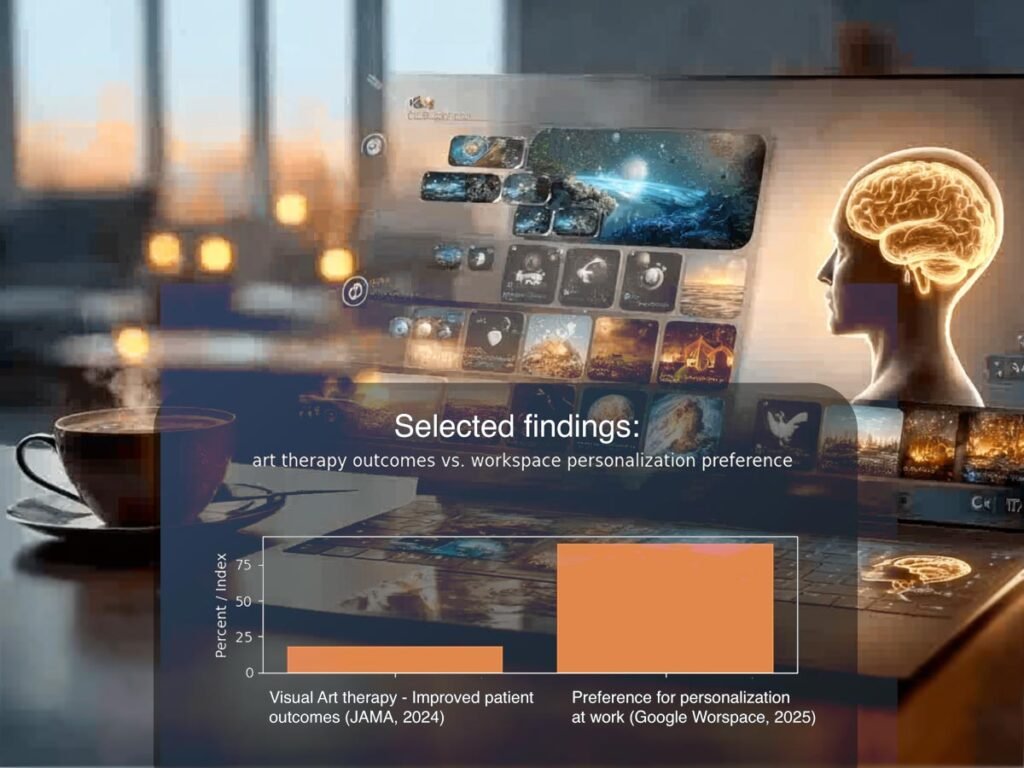
Visual art therapy outcomes (JAMA meta-analysis, 2024): A 2024 meta-analysis found active visual art therapy was associated with improvement in 18% of patient outcomes across multiple studies — evidence that art interventions can produce measurable benefits in wellbeing and treatment contexts. While desktop customization isn’t a clinical treatment, the study shows visual art influences measurable outcomes. JAMA Network
 Symbolism and motivation — meaning drives purpose
Symbols don’t just decorate — they orient. Cognitive priming research shows that exposure to goal-relevant cues can activate related intentions, making follow-through more likely. For example, a small trophy icon on a project folder can subtly bias you toward prioritizing that folder’s tasks. For professionals, this is powerful: symbolic Desktop Art lets you create a visual architecture of priorities without adding a new app or checklist.
Practical tip: Pair a symbolic wallpaper (e.g., a lighthouse) with an icon set that uses directional metaphors (compass, waypoint, beacon) to reinforce the same narrative across the desktop.
Visual anchors for calm — art as a micro-intervention
Stress Reduction Theory (SRT) and the WHO’s arts-and-health work both support the idea that art and nature reduce stress and enhance wellbeing. Even short exposures to restorative images — a wallpaper you glance at for a few seconds between tasks — can reduce arousal and create a mental breathing space. For busy professionals, these small pauses compound: calming Desktop Art reduces reactive stress loops and contributes to steadier performance over a day. NCBI+1
Art + mental health: clinical findings
Visual art therapy and receptive engagement with the arts have measurable effects. The JAMA meta-analysis (2024) reported an 18% association with improved patient outcomes in studies of active visual art therapy. The WHO scoping review synthesized thousands of studies showing arts engagement linked to prevention, promotion and treatment outcomes. These academic signals validate the claim that symbolic art — even in desktop form — can be a practical component of mental-health strategies when used thoughtfully and not as a substitute for clinical care. JAMA Network+1
Workspace personalization and professional performance
Multiple organizational studies show that employees perform better when they feel ownership over their workspace. Digital desktops are now a primary workspace, yet they are rarely optimized at the organizational level.
Desktop Art offers a scalable form of personalization that balances individual expression with corporate coherence. Professionals can maintain personal focus cues while organizations preserve visual consistency and brand alignment. ResearchGate
Desktop Art as a Corporate Branding Tool
Beyond individual benefits, Desktop Art has significant value as a branding element for companies. Wallpapers, icon sets, and screensavers can incorporate company logos, brand colors, typography, and symbolic motifs that reflect organizational values.
Imagine a company where:
-
Every device displays a branded wallpaper aligned with the company mission
-
Icon sets subtly incorporate brand geometry
-
Screensavers reinforce core values or strategic themes
-
Folder systems mirror organizational workflows
This approach transforms Desktop Art into a living brand touchpoint—one employees engage with daily, not just during onboarding or marketing campaigns.
Arnaez Studios: Custom Desktop Art for Companies
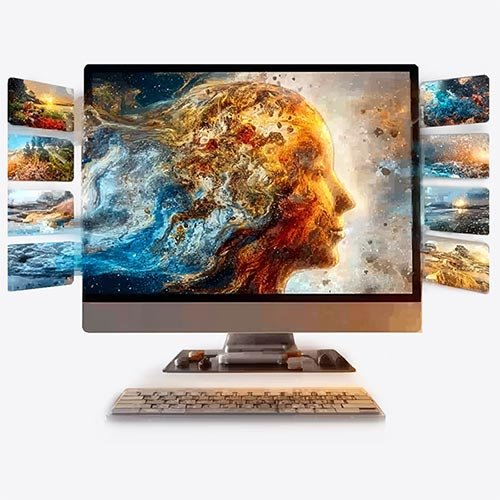
This is where Arnaez Studios plays a strategic role.
Arnaez Studios offers professional services to design custom wallpapers, icon themes, and screensavers for companies, tailored to their brand identity, culture, and goals. Organizations can specify:
-
Preferred symbols and metaphors
-
Brand colors and logo usage
-
Desired emotional tone (focus, calm, innovation, trust)
-
Industry-specific visual language
These assets can be deployed across all company devices, ensuring visual consistency while enhancing employee experience. Desktop Art becomes both a functional productivity tool and a subtle brand reinforcement system.
For companies seeking differentiation, this approach bridges design, psychology, and branding in a way few tools can.
Measuring impact: simple metrics for busy teams
-
Self-report: 5-point scale on perceived focus before/after theme adoption.
-
Time-on-task: Use existing time trackers (privacy-compliant) to compare deep-work session lengths.
-
Distraction events: Count app switches or notifications silenced during sessions.
-
Adoption rate: Percent of team who install a theme within two weeks.
These lightweight measures give you practical ROI data.
Ethical & cultural considerations of symbolism
Symbols carry historical and cultural weight. Avoid using sacred or culturally-specific imagery without permission. Keep themes inclusive — what calms one person may trigger another. When in doubt, offer alternative themes and solicit feedback.
FAQ — common questions from professionals about Desktop Art
Q1: Is Desktop Art just decoration?
A: No — when chosen intentionally, symbolic Desktop Art functions as a cognitive cue and restorative micro-intervention that can improve attention and wellbeing. Academic work on attention restoration and arts and health supports this. PMC+1
Q2: How quickly will I notice effects?
A: Effects can be immediate for mood and subtle cognitive priming, and measurable over days for focus and ritual adoption. The literature shows brief exposure to restorative images improves attention in single-session experiments. PMC
Q3: Can digital wallpapers replace therapy or clinical treatment?
A: No. Symbolic Desktop Art is an adjunct, not a substitute. Clinical conditions require professional care. However, visual art interventions have measurable supportive effects in clinical studies. JAMA Network+1
Q4: Will symbolism work for everyone?
A: It depends on the fit between symbol and individual meaning. Offer several themed options and let users choose what resonates. Cultural sensitivity matters. ResearchGate
Q5: What’s a low-effort starter pack for teams?
A: A 3-theme bundle (Focus, Purpose, Calm) with instructions for use (when to switch themes) and a one-week trial for adoption tracking. Cryo64.com and OhMyIcons.com both offer customizable packs for this approach.
Q6: Do symbols help memory and task recall?
A: Yes — research on symbol superiority indicates graphic symbols can be better remembered than words, supporting faster recall and better cue-response behavior.
Conclusion
Symbolic Desktop Art is more than an aesthetic choice — it’s a practical tool for professionals who want to shape attention, create ritual around work, and add small, evidence-backed supports for mental wellbeing. The academic literature (Attention Restoration Theory experiments, the WHO scoping review, and JAMA meta-analysis) provides a solid foundation for treating visual desktop design as a legitimate cognitive and health-support strategy.
If you’re curious to experiment, explore curated symbolic themes and bundles at Cryo64.com, or check complementary icon collections at OhMyIcons.com to mix-and-match focused iconography across your devices.